1000小食报 #64 一场关于食物文化存档的对话
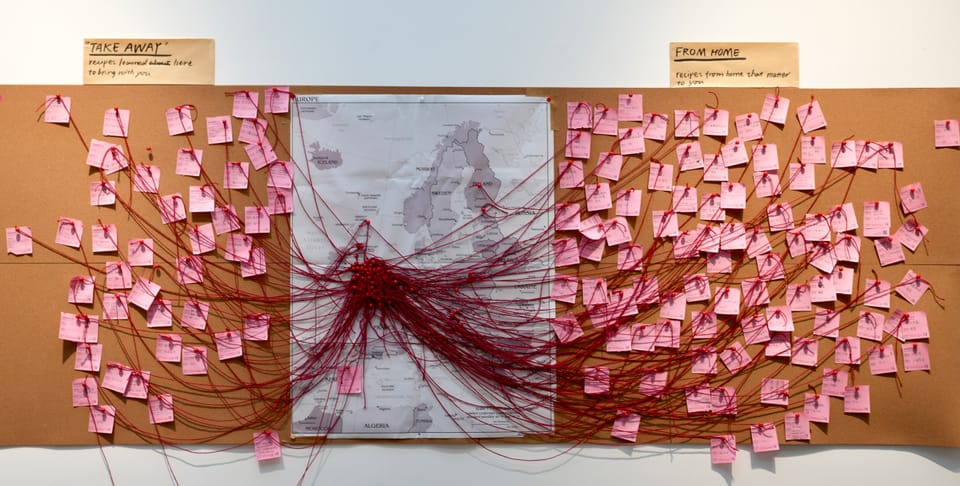
今年四月伦敦 Outland 书展结束后,我们收到了来自总部位于香港的亚洲艺术文献库(Asia Art Archive)副主编 Judy Chiu 的邀请,进行一场关于食物存档实践和饮食文化遗产保护的对话。共同对话的还有 AAA 的研究员 Noopur Desai,以及同样致力于家庭食谱存档的印度线上平台 Nivaala 的发起人 Shruti Taneja。
第一次听 Judy 提到 Nivaala 在做的事,又看过发起人 Shruti 的媒体报道,我们惊讶又感慨——这完完全全是一个在印度长出的“1000小食”计划。尽管中国和印度的饮食文化截然不同,但我们和 Shruti 都看到了家庭食谱传承的意义,也都在尝试不同的传播和技术方式,激发人们的记忆和存档的行动。当然,我们也都要面对如何让这件事持续得久一点的挑战。在对话中,AAA 的 Judy 和 Noopur 也从她们的视角,与我们分享了许多“存档”工作的思考,以及涉及食物文化记录的更多艺术书作品。
还有一些我从未深入反思过的问题。比如 Noopur 提到,“我们思考食谱和食物的历史时,通常会想到那些唾手可得、供应充足或过剩的食物。但我们又该如何看待那些诞生于匮乏和饥饿之中的食谱呢?”
对话全文已发布在 Asia Art Archive 的线上平台 LIKE A FEVER,可查阅:https://aaa.org.hk/en/like-a-fever/like-a-fever/behind-the-plate/type/conversations
本期1000小食报获得授权转载这场对话的文稿实录。
BEHIND THE PLATE
Shruti Taneja, Young Xiao, and Tiantong Yan discuss preserving food heritage through family recipes, social structures around the kitchen, and forgotten culinary histories in China and India. Moderated by Judy Chiu and Noopur Desai.
Judy Chiu (JC): Thank you everyone for joining our conversation today. I’m really excited to talk about the different methods and motivations of preserving food heritage with you all.
Young and Tiantong, your initiative 1000PIECES is interested in the idea of “home” and how it translates on the dinner table. You collect family recipes around China and activate them through videos, exhibitions, as well as publications. And Shruti, your initiative Nivaala is similar in that you also collect family recipes in India, where you’re based. You similarly activate your collection by producing publications and hosting workshops. I’m particularly interested in the bespoke recipe books you make for families.
Perhaps we can start this conversation by talking about your different approaches to recording food stories. What inspired you to collect food stories and what are some questions you set out to answer when recording a family recipe?
Shruti Taneja (ST): Thank you for the introduction. To give you a bit of background on why I started Nivaala, a lot of people in our generation don’t spend much time in the kitchen, and many recipes that give us comfort are taken for granted. We always think they’ll be there, but mortality is real, right? These recipes will eventually be lost when people die. And unfortunately, I learned it the hard way. I lost my mum in 2015 and then my grandmother in 2019. They were the two sole people in my family who used to cook. And sometime in 2019, when my nephew was born, I realised I didn’t know how to make something as simple as a pinni, which is like a wheat ladoo. He’ll never be able to taste what we’ve grown up eating every winter. And we talk about all sorts of inheritances in the world. But few talk about food and recipes as inheritance. When we document recipes, we don’t just document the ingredients and set of instructions because food is more than that. It’s about the person who is making it and adapting it in that moment—how they learned the recipe and how certain ingredients are swapped based on their availability. We try to capture what is behind the plate. Who did they learn the recipe from? How far does it go back in their family? Even in our journals, we have one section on which family generation the recipe belongs to, because the older the generation, the more valuable it is.
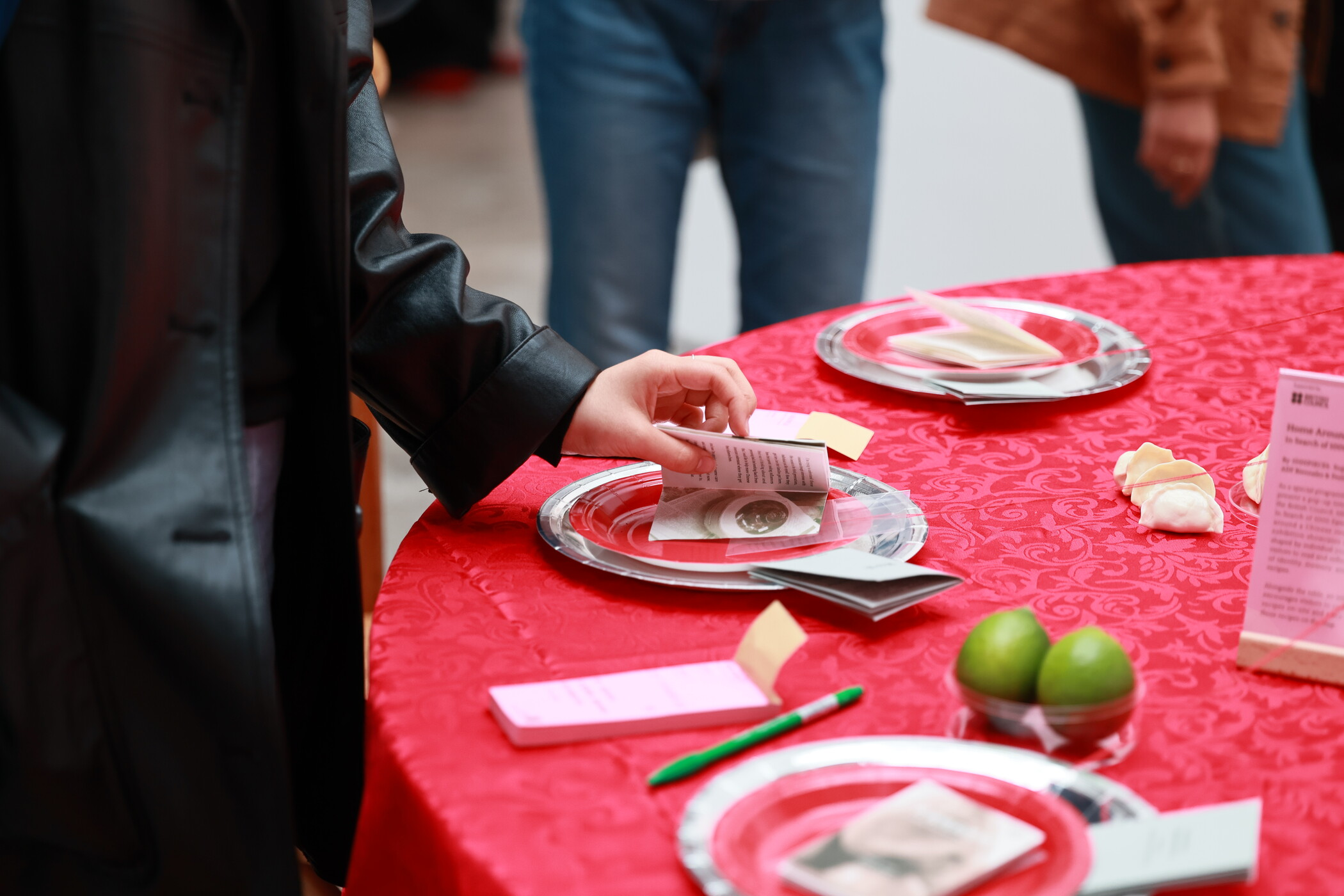
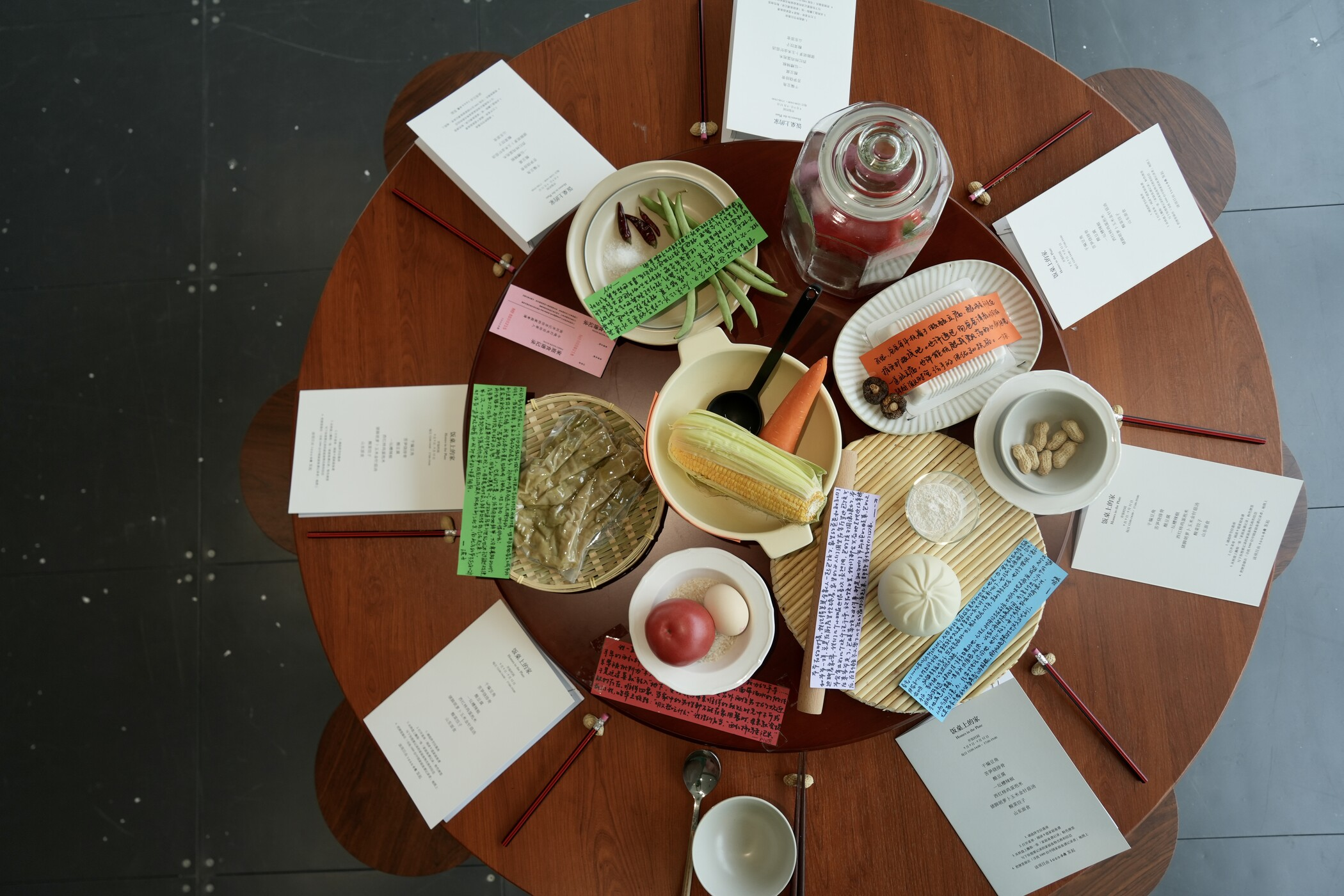
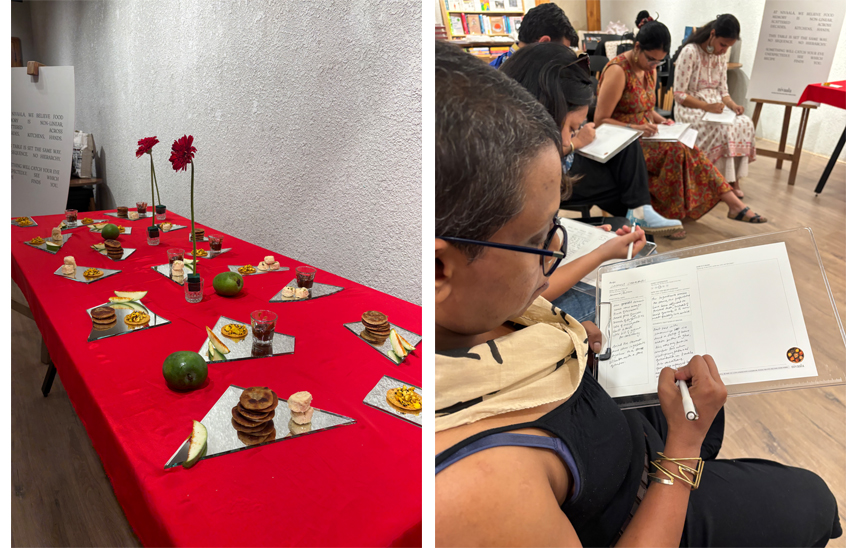
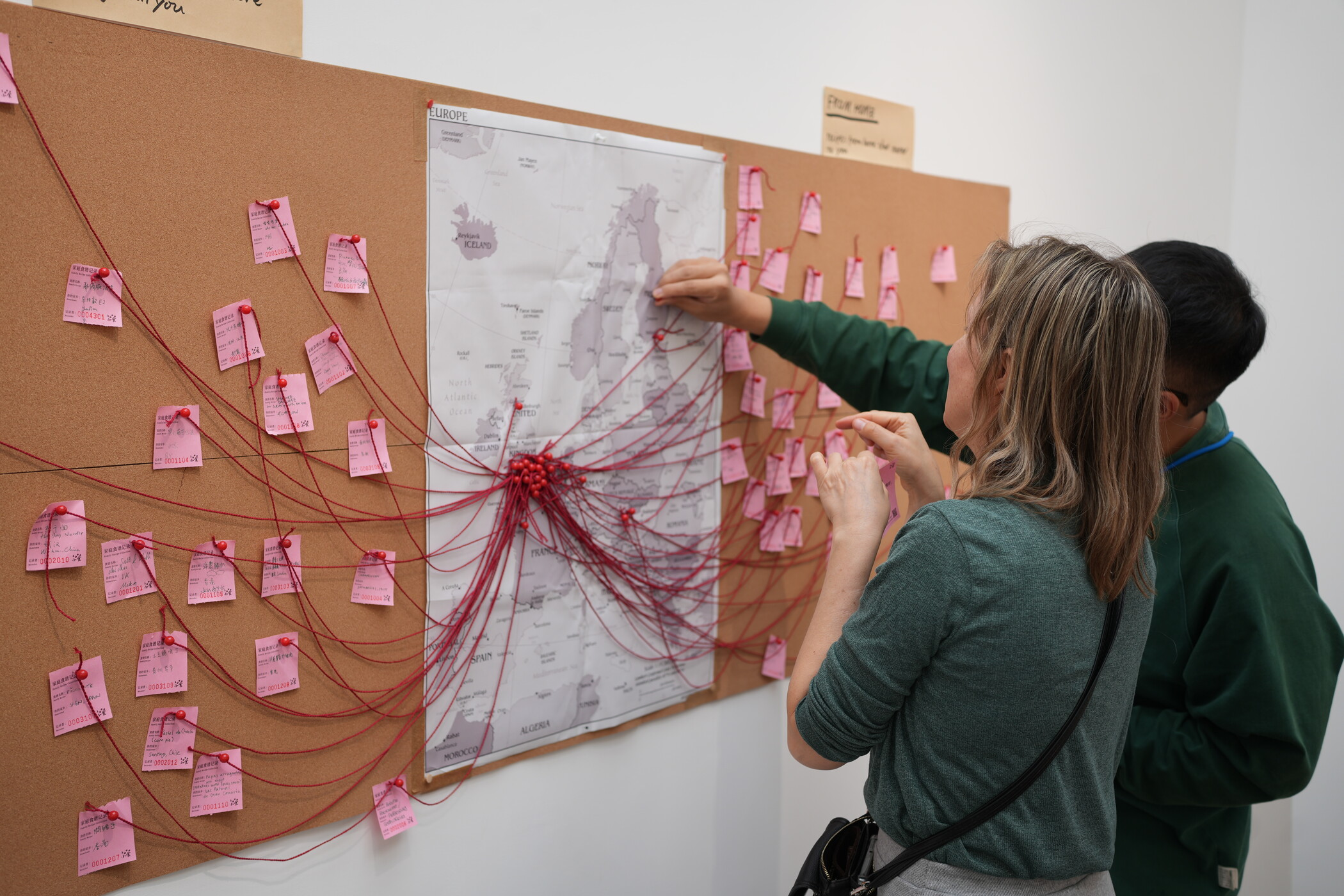
Young Xiao (YX): I think food itself is a great icebreaker. Even if you are meeting someone for the first time and even if they are super quiet, once you talk about food, especially the dishes they grew up eating, they just light up and have endless stories to share. Whenever we talk to participants about our project, we simply start by listening. Over the years with 1000PIECES, we have collected stories in many different ways. We do newsletters, video interviews, and we also chat face-to-face at our exhibitions and workshops. Sometimes we visit people’s kitchens and cook and chat at the same time. We found that the best stories come out when we are actually around the food, like in a home kitchen, around a dining table, or at a local food market. At our exhibitions, we always set up a real dining table and sit down to chat with the audience.
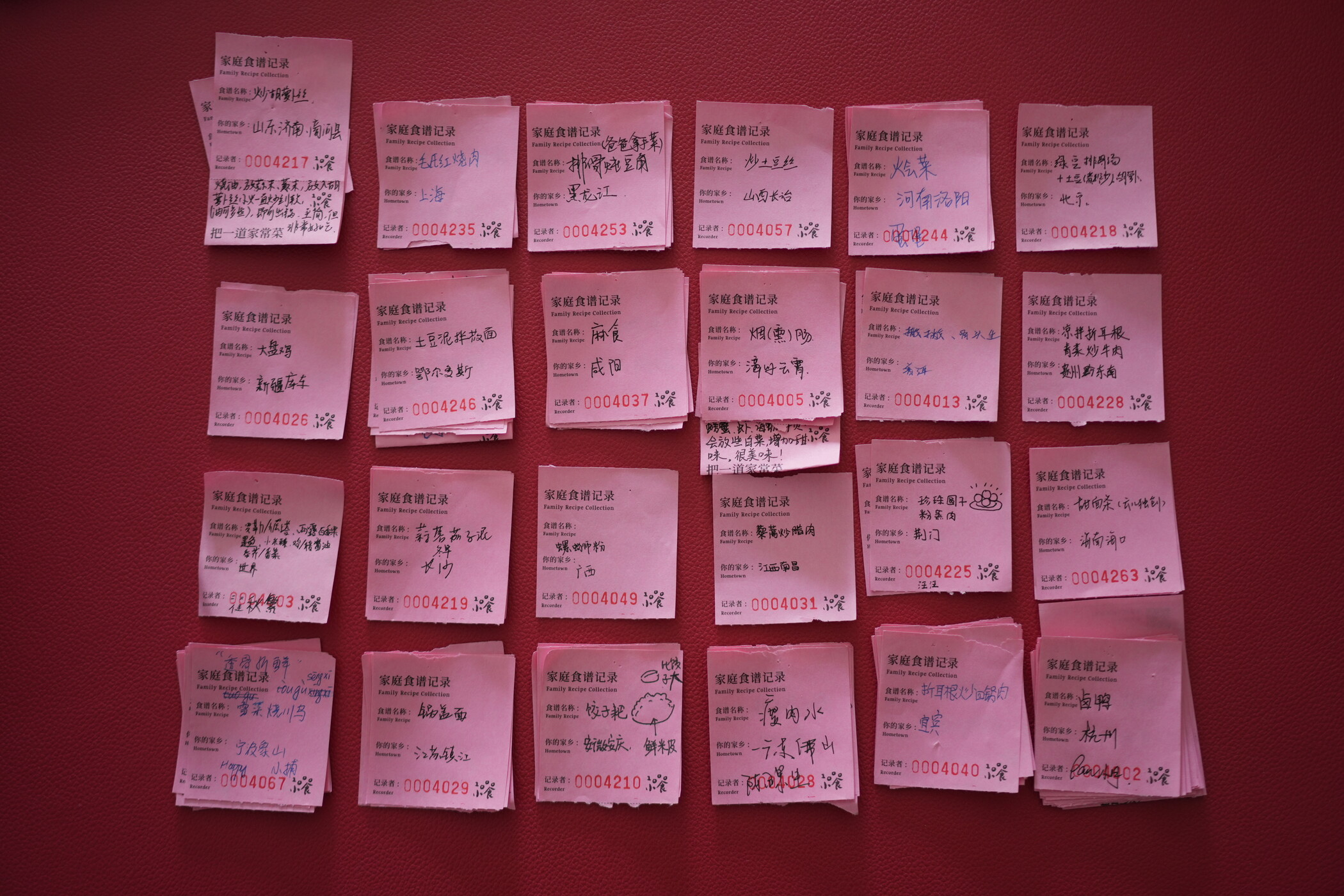
When we record family recipes, we focus on mainly two things. First, the recipe itself. We want to know the whole process, from shopping to preparing, to the final dish and their unique family secrets. How do the ingredients connect to the local food culture? Second, it’s all about family and personal memories. We will locate the recipe first, whether it leads to someone’s hometown or follows their migration. We will try to find that deep personal connection. Is it about a deep love for a family member or does it reflect how they built their own life? At the end of the day, what we really want to find out is how everyone defines “home,” especially psychologically, in their hearts.
JC: I love how for both of you, recording recipes is not just about practical documentation. While the practical need to document how a dish is made is important, recording the family histories that are tied to the recipe is equally, if not more, valuable. Like you mentioned, Young, food can be a powerful entry point to talk about these very personal histories that sometimes you don’t really reflect upon. And I find it very lovely that in your exhibitions for 1000PIECES, you have the actual physical setup of a dining table. Because I do agree, being within a space like that really affects how we think about food and how we discuss our own histories. For a lot of your workshops, you also make food and eat food with participants. The physical experience of food is also quite impactful and touching as a way to get people to think about these memories.
Noopur Desai (ND): Food occupies a very significant amount of time and space in our everyday lives. I’m based in Delhi and we have a small office space for Asia Art Archive in India here. One of the fascinating parts of our daily office routine is our lunch time conversations. We have often joked that if our lunch table had a microphone, we’d probably have a long-running series by now! These conversations meander through current events in the art field, cinema, K-dramas, and political events. But at least seventy to eighty percent of the time is spent on talking about food. And one important reason is that all of us come from different parts of the region and all of us bring home-cooked food every day. So, we share recipes, discuss ingredients, talk about which food originated where, the regional varieties of some recipes, the migration of certain fruits and legumes, and even the politics of food and the histories of some eating habits. The range is quite broad, but food is an integral part. We have inherited many recipes from our families, but over the years, we have also consciously moved away from some of them while taking to diverse ingredients, techniques, and ways of cooking.
In this context, I also wanted to ask you all about your specific interest in family recipes and why family becomes this important lens through which you have decided to look at food histories and recipes. What does this family lens bring that other forms of documenting recipes may or may not reveal?
Tiantong Yan (TY): I think it’s very natural for people to be interested in their own family recipes, especially nowadays, when most of us have the experience of relocating to another place. Both Young and I went to Beijing for university and that was the first time we left our hometown. Food immediately became the connection between us and our hometown.
Young and I started 1000PIECES by recording our own family recipes and how we observe our daily lives through the lens of eating. It all started in this personal way. When talking about local food or Chinese food culture, it’s hard to find a very tangible thing to tackle. You can find materials in old files but most of them are based on famous restaurants, famous chefs, and the names recorded in history. I think the real history behind the food culture of a society lies in the everyday cooking of home cooks. Their everyday labour and efforts contribute to everyone’s tastes and forms a regional food culture. So, I think after realising that, we focused more on recording family recipes when doing food research in different areas.
ST: In India, food literally changes every hundred kilometres. When you document food at a very granular level, which is at the family level, that’s as authentic as it gets. Every family has a different way of making something, and if it’s documented at a regional level, it will get stereotyped. The technique of how it’s made will get dumbed down. For example, when documenting something as simple as dal, you can imagine the variations you’ll be able to see across the board, across India—how versatile one ingredient can be and how one ingredient can have such different flavour profiles based on the tempering and spices used, and the technique used to make it. And that, to me, captures the authenticity of a region.
Authenticity is a completely separate debate altogether—to see what is authentic, what is not, and how they evolve. There is evolution in terms of technique. There is evolution in terms of what is available in certain regions and what is not. There’s also evolution with migration. When you move to a different region, you may not have something available, so you’ll swap it with something else with the same flavour profile. Or, you’ll source a dried-out version, which will alter the taste slightly, but to someone who’s grown up eating that specific thing, they will be able to identify it. I think it’s great to document food on a national or even regional level, but to be able to go deep into every minute region, every town, village, and do it at a family level, you’ll actually be able to see what is authentic and not what is getting stereotyped.
JC: I’m really glad you brought up this conversation on the idea of authenticity, because that’s also something I’m really interested and curious about. It reminds me of the project 1000PIECES did on mapo tofu. Mapo tofu is one of the most famous Chinese dishes but there’s like one hundred different ways people are making it, according to their region and their families. I think this idea of authenticity, and why I’m curious about it is, like you said, recipes evolve according to people’s preferences, tastes, or where they’re living. So, I wonder how you guys approach this question of authenticity—or, is authenticity even something you are concerned about preserving? How do you go about preserving something that is constantly changing according to the times and different generations?
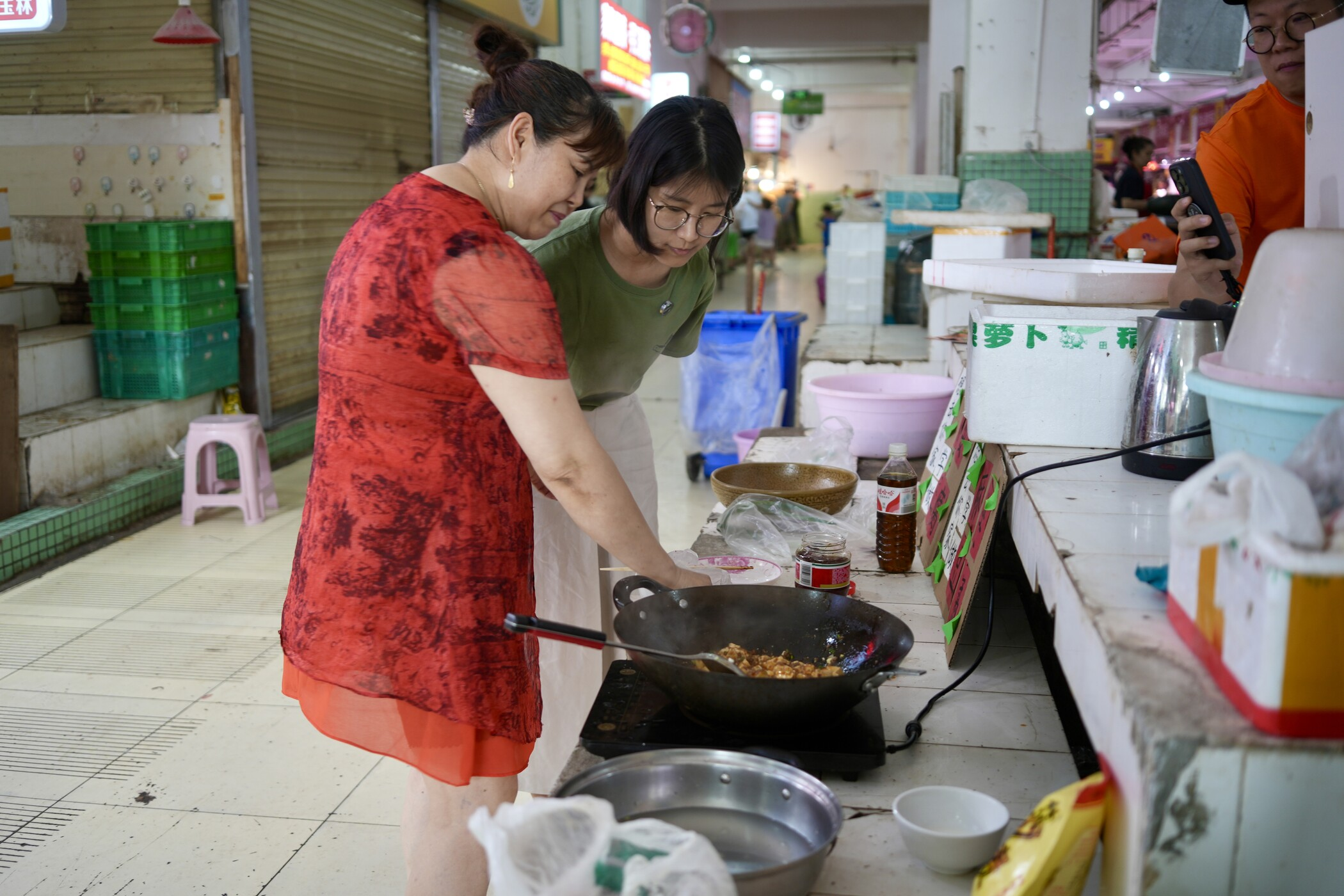
TY: Yeah, I didn’t expect our conversation to go this deep so quickly. [Laughter.] That’s something we’ve been thinking about for several years. And I have to say that, Shruti, what you’ve just shared is such a great vision on how you want to widen history by documenting it at a very micro level. For us, we first met the issue of authenticity during our research on mapo tofu. While mapo tofu might be the most famous Chinese dish in the world, it’s actually not a home-cooked dish in the Sichuan region. A lot of people just go to the restaurants for it, or even if they have their own way of cooking it, it is not the “authentic” way. This “authentic” mapo tofu that the public understands can be found in old cookbooks or in the restaurant that invented it two hundred years ago and is still running today. Some people have turned to these records in search for authenticity and we did the same thing. But when we went through all these documentations, the details were not the same. In different books important to Sichuan cuisine history, they stated different things. We tried to note down every detail and presented them in a long article about how authenticity is hard to find and changes through the years of the dish’s development. We also visited five to ten families in the Sichuan region to see how they stew their tofu. No one actually follows any cookbooks. They just cook it in their own way.
When we were at an uncle’s home, he stewed the tofu while talking to us. He shared his experiences serving in the military for a very long time. The talk lasted around thirty minutes, and the tofu was stewing the whole time. That tofu was one of the most delicious mapo tofu we tried during our research trip. He revealed that time—how long the tofu is in the pot for—is very important to mapo tofu. But in many restaurants nowadays, because the ingredients are cheap and it’s not an expensive dish—maybe 20 RMB—they try their best to decrease the time on the stove to maybe five minutes. Does authenticity lie in these restaurants? I don’t quite think so. Based on our experience, it lies in different families and in their daily practices.
Mobility is also very important to the concept of authenticity. At our recent exhibition in London, we talked to some Chinese diaspora who have been there for a few generations or are international students. They have totally different views of authenticity than us living in China. I still remember one story from a friend. She found that there are two different menus in the Chinese restaurants that she often visits in London. If you are Chinese, you get one version. And for foreigners, they share the other version. But to our surprise, for Chinese customers, the price is even higher! People need to spend more for authenticity. Authenticity can also be turned into a product or service.
ST: At Nivaala, we do these events called Kitchen Calls, which are community events where we get people around the table to document a personal recipe. They can call their mums, grandmothers, whoever, and write the recipe down with the story behind it. We create a live community cookbook on the spot. It’s a way to preserve one recipe that you would have never documented and also share it with other people. We do different versions of this event with different themes and concepts. Last month, our concept was “Inherited and Adapted,” where people got together and spoke about recipes that they’ve inherited and then adapted based on migration or availability, and made it their own.
Someone spoke about this one example. Recently in India, there was this LPG(1) shortage and people were unable to cook and make food. And this one person shared how they called their mum to source this one kind of pressure cooker, which she used to get and a lot of Gujarati households use. It’s like this tall pressure cooker which has tiers of vessels in it, so everything can cook simultaneously—your rice, your vegetables, all in one shot. It makes your cooking very efficient. And she was talking about how it’s completely sold out everywhere. She’s not able to get it at any place. In terms of authenticity, of how things are made and what vessels are used to make it—everything is circular, right? Everything comes back at some point. Even certain utensils are making a comeback today, like a mortar and pestle. A mixer grinder used to make it super easy to make your chutneys but now, the slow grinding process of using a stone mortar and pestle to grind down your chutney to avoid the change in flavour profile due to heat, that’s again making a comeback. And that I feel is authentic in its truest sense.
ND: I was struck by what you said, Shruti, about regional stereotypes when we think about food practices. Especially because specific foods come to represent specific regions. What happens in that context is that these foods usually come from dominating regions. For instance, Indian food outside the country is dominated by a specific region, like Punjab. So Punjabi food, or South Indian food, becomes representative of Indian food outside India. But Punjab also has so many different kinds of eating and cooking practices. Also, like you both were saying, through the history of migration, the flow of new ingredients, spices, methods, and processes are in constant flux. When we try to go back to this authentic recipe, the one question that arises is, are we being purist in a sense? How do we bring in these different variations that exist across different communities and different regions?
In the context of authenticity and the example that Shruti was talking about, grinding chutneys with mortar and pestle involves a lot of physical labour too. And women have been taking that labour upon themselves, because grinding chutney would take half an hour, as opposed to five minutes using an electric grinder. If you look closely, many women do not necessarily enjoy cooking, yet some—perhaps most—are exceptional cooks because they have little choice. They are expected to be caregivers, and their identity and position within the household and family structure often depend on how well they cook. There is an incredible Malayalam film, The Great Indian Kitchen, which vividly shows the immense amount of labour women put into cooking every day—from chopping, grinding, cleaning, and churning to the countless other repetitive tasks that sustain a household. So, I wonder how do we think about these various aspects of labour, about whose labour that is involved, when we are talking about the authentic or traditional recipe?
ST: What I’ve noticed when we are documenting recipes, is that a lot of credit has been left out and people have been left unnamed because of the caste system. For example, when we were documenting one family’s recipe, they said, “It’s my grandmother’s recipe.” I asked, “Who did she learn it from?” And after pressing them, they revealed that it was one of the house helps who taught it to her grandmother, but she’s no longer there and they don’t remember her name. So, the origin of the recipe has been completely been erased.
There’s this book that we did, Memories on a Plate, in which we captured stories of Indian kitchens. There’s this illustrator and writer who shared a recipe of a house help’s chicken stew. The title is “Reena’s Chicken Stew” and it is about how the house help used to come and make food for them every day. One day, she wanted to try something completely different and very shyly asked her helper, “Can you give me Old Monk?” And her helper was like, “Why do you want that?” She said, “I’m trying something new with the chicken.” She wanted to add Old Monk Rum to the chicken. And that became a household favourite. She’s named it “Reena’s Chicken Stew,” after her helper. So, you know, just giving credit to who made it, who they learned it from, and pressing people to do that. I think it’s important to understand the backstory and trace the origin as far as we can.
TY: In our experience, when participants ask their grandparents, especially their grandmothers, about food from their hometown, the older generation is very thrilled and extremely happy because perhaps no one has ever asked them before. And without us asking, they may never share the details or their own personal or childhood memories to others. I think a lot of these stories are forgotten very easily.
JC: I really appreciate how you both make an effort to document underrepresented recipes and food cultures, and also give credit, like Shruti said, to people who have not been properly remembered in food history or even popular knowledge. Since all these recipes and food stories that you collect are so deeply personal and connected to one person’s family history, when you’re thinking about how to present these stories, what are some ways you make them relevant and accessible to the wider public? What are some activation strategies?
YX: I think timing is important. During Chinese New Year, everyone goes home to meet their families. It’s a time that carries the strongest emotions about hometowns and families. So, during Chinese New Year, we will share stories we have collected on Chinese New Year dishes, and also start a call for people to record their own family recipes. Reunion dinners give people the perfect opportunity to start a conversation with their families. We do exhibitions across different cities. In each city, we will select specific stories that have a connection to the local food culture. This creates intimacy between the stories and the audience immediately. We love to highlight details that usually get overlooked in family recipe stories, because those key details tend to stay in people’s minds more than the whole story does.
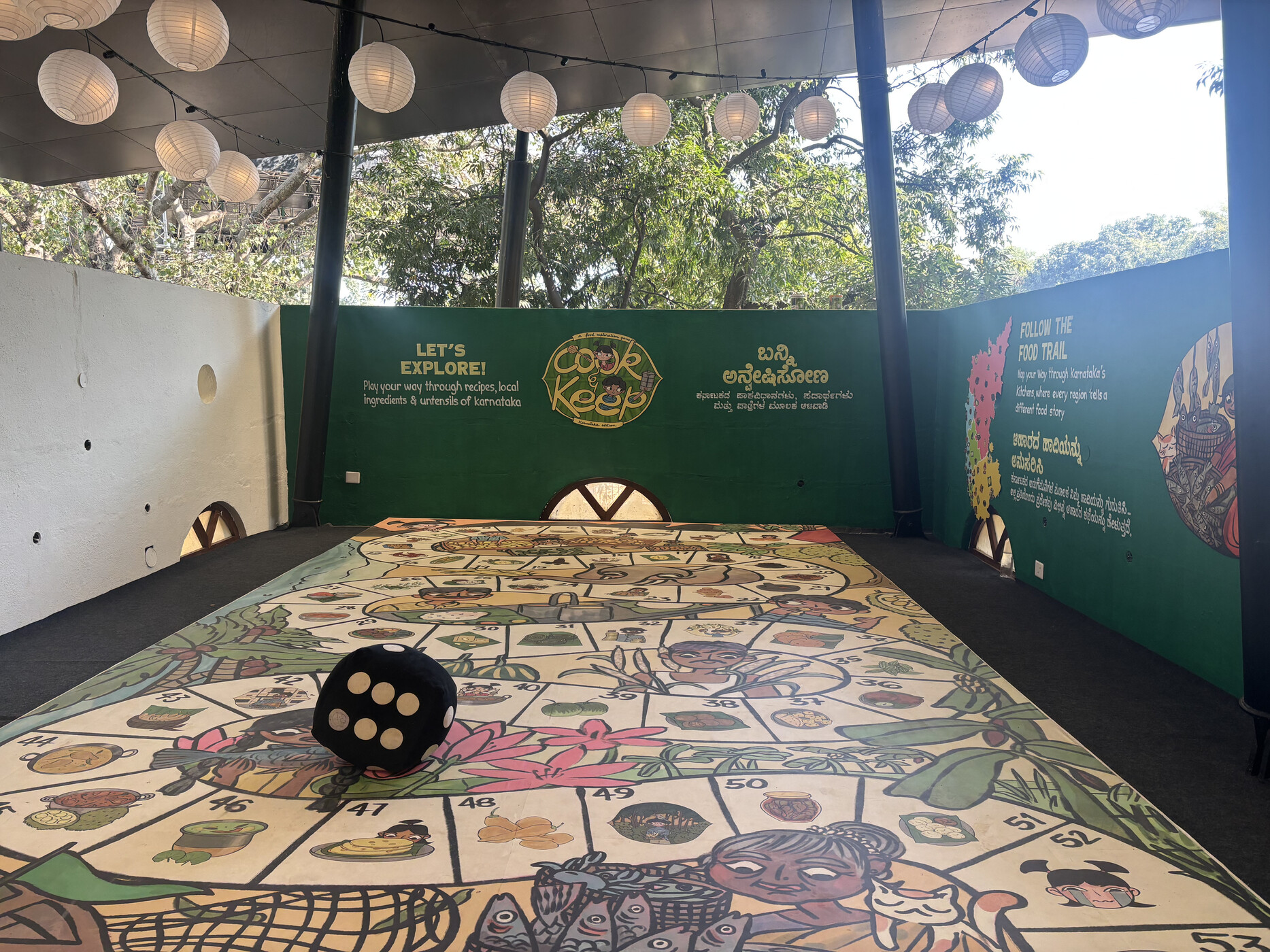
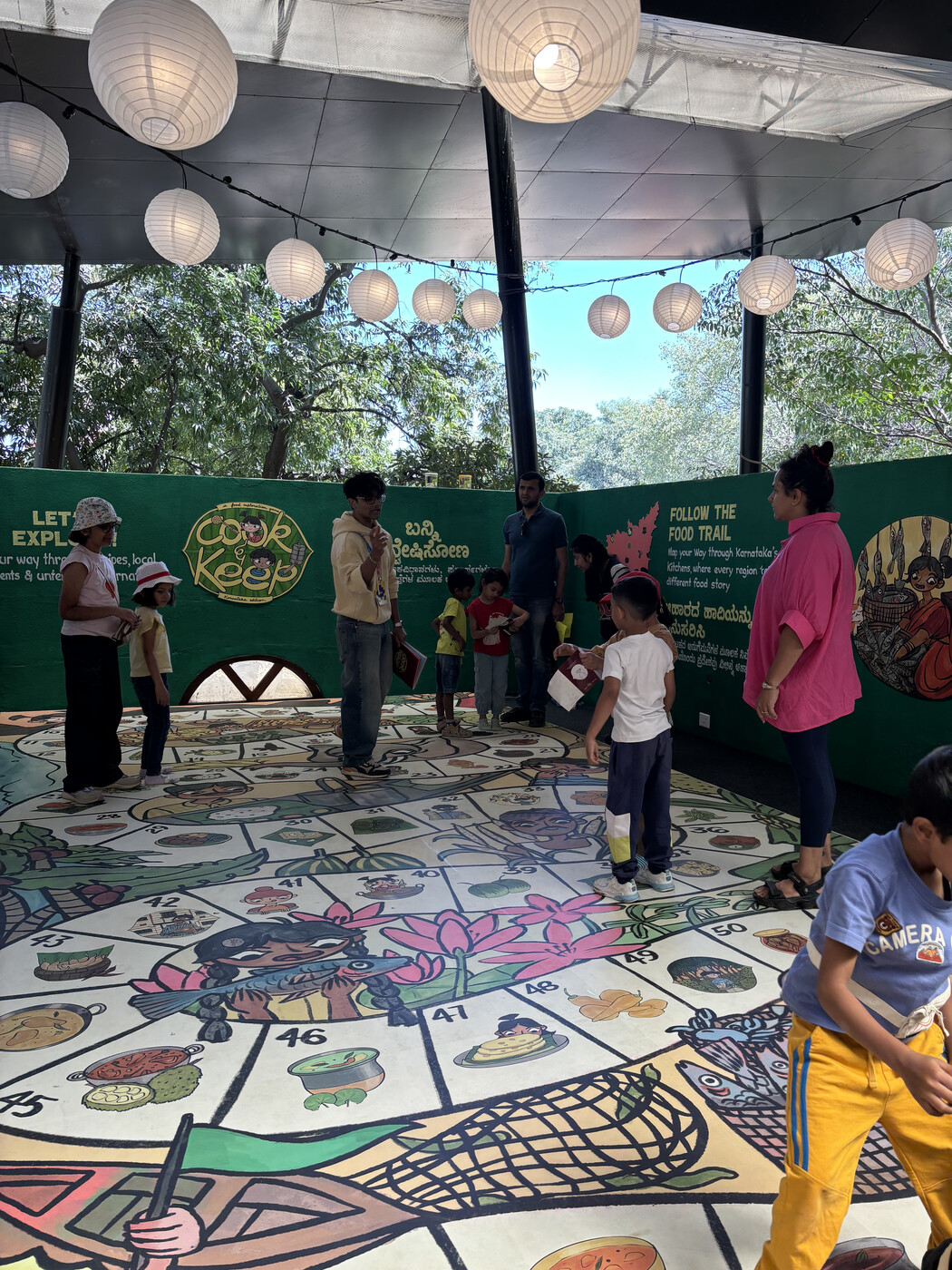
ST: Firstly, I’m all for art because I feel that, when you photograph food, it creates a lot of pressure on you to replicate it as it is, as opposed to an artwork that leaves more space for interpretation. It’s more playful and not as intimidating in that sense. We have developed food games for children—and adults also tend to enjoy it—where we’ve made life-sized installations and you can go around the large game board after rolling huge die. You get a food passport and as you go on the board, you roll the die, land on a tile, and then have to guess the dish you land on. You get to know a little fun fact about the dish, and place it on the map. That is an interactive way for kids and adults to learn more about food—where certain recipes come from, what are the ingredients, and how it gets made. Secondly, if you represent all the stories that you’ve captured in a very visual way, for example, by creating a timeline of how one dish has evolved, it visually makes it so much more engaging and easier to absorb as opposed to reading plain text. Thirdly, I feel that capturing the story in the person’s voice, in their dialect, also makes it super authentic. Like listening to a grandmother talk about a Partition recipe that used to be made in Pakistan in her specific dialect of Punjabi. That is so much more intriguing and heartfelt to listen to. You can always read the subtitles to understand. Keeping the dialect engages the audience a lot more than trying to make it universal for the sake of it.
TY: How do you show all the audio recordings to people?
ST: We have two ways to do it. One, all the audio recordings that people record in our app are completely private because we’ve realised people are very particular about protecting their family recipes. Even with the family cookbooks, we sign an NDA with everyone. But we also have an option where if you choose to make a recipe public, you can drop it on our digital Food Atlas. We are developing this atlas where you can search or just discover and explore recipes from different regions. If someone chooses to make a recipe or voice recording public, it can also be documented in a typed-out way. We also interview a lot of home cooks and manually upload it from Nivaala’s end, and obviously we do it with their consent. We’re building this interactive map, just like Google Maps, where you can discover street food or restaurants in the area. We’re doing that with family recipes.
TY: I’m really looking forward to taking a look at your app. What you just said is very interesting to us because we actually do quite similar things, though not at your level because you’ve gone much further than us, but we also show people real recordings of phone calls in our exhibitions. And as you just said, listening to a grandma in her own dialect is more intimate. So even if people might not understand that much, they can still feel the strong emotions exchanged between her and her granddaughter. Once, we set up a telephone booth in our exhibition. We wanted people to, after reading our stories, go into the booth and give a call to their parents immediately. But I think an app sounds like a much smarter way to do that.
ST: Unfortunately, our app is only available in India right now but the dream is to go global one day. But the phone booth is a great idea. The energy is so different when you allow people to speak in their language as opposed to one that everyone can understand. And today, because of AI, we’re fortunate enough that it’s easy to have translations immediately. You can immediately have subtitles and transcriptions. On our app, we have a feature where all speech can be translated to text. You can also transfer the entire recipe into a PDF and share it with your friends.
JC: Nivaala and 1000PIECES are the first food archiving initiatives I’ve personally come in contact with that focus on family recipes. I was wondering if there are other initiatives similar to yours in your respective countries? And also, what has the reception to your work been like?
ST: In India, people are finally looking at regional food with a sense of pride. Like Noopur said, Indian food is more than just butter chicken. It’s more than the stereotype. So, when you visit these home cooks and ask them for recipes, they are very enthusiastic to share where they come from and the stories behind each dish. The food scene in India is changing rapidly. Even in restaurants, the way chefs are cooking today, they are cooking food that they grew up eating, which I think is great. And they’re doing it not just at the national level, but also at an international level. If you see an Indian chef opening a restaurant in New York, he will be cooking the food that he grew up eating, not trying to change the flavour profile massively to adapt to a Western audience. So, I think people are trying to bring their regional food forward with a sense of pride and show the public this is where I come from, this is what I have grown up eating, and this is the food that my family used to make. That shift is happening.
TY: Generally speaking, in China, we also see some different regional cuisines become popular in the past few years. As for food archive practices in China, while we don’t know that much about the official actions taken by the government, we know that like many countries, they have set up a national memory bank. Memory banks are mostly initiated by the Department of Culture or by the national libraries. But we haven’t seen any specific focus on food from any of them.In the last five years, the buzzword in China is “intangible cultural heritage.” It’s a term raised by UNESCO maybe thirty years ago. They want to promote the idea that everyone should protect their own folklores, languages, music, traditions—these intangible things. But in China, we’ve seen a massive wave of local traditions applying to get officially recognised as part of this heritage. Some practitioners are appointed as the official inheritors of these traditions, and it’s organised on different levels: the national level, the provincial level, the city level, and the county level. And all these inheritors’ stories and their craftsmanship are being spread via media to people. This “heritage” label has really caught the public’s eye, becoming a go-to tag for traditional craftsmanship and culture.
Culinary culture also plays a big role in this heritage, because food is very important in Chinese culture. But I think officially, they mainly focus on traditional regional cuisines and practices based off of historic restaurants and famous chefs. They don’t really pay much attention to everyday people or family recipes.
For projects that focus strictly on food memory archives, the Forever Flavours Project is a great example. It is a project initiated this year by UNESCO and Lee Kum Kee, a global seasoning brand that originated from China. 1000PIECES has been part of the whole process. The project is about recording people’s food memories, regardless of their nationalities and if they are professional chefs or not. Lee Kum Kee originated from China, so I think there are more Chinese and Chinese diaspora stories in their archive now, but they’re trying to build this memory bank beyond borders. We just started last year, so there’s still a long way to go. We want to keep expanding this conversation and getting more people involved.
ND: If I can just add to this, because I was also thinking about the state and official narratives about food. In the context of India, because of hierarchical social structures in terms of caste and religious identities, certain foods are considered superior. For instance, vegetarian food is considered superior, pure, and hygienic. There is a certain kind of stigma around non-vegetarian food. Recently, Uttar Pradesh, one of the states in India, declared a list of recipes and food items for each district within the state. Each district was assigned a representative food item. The entire Uttar Pradesh is a big state, so there are many, many districts. But the list did not include a single non-vegetarian dish, reinforcing this hierarchical and oppressive structure that exists in the society.
There are many independent initiatives in the region that are questioning, challenging, and intervening into this official narrative. I can speak about a couple of artist initiatives from the region. There is this artist called Rajyashri Goody who is trained as a visual anthropologist but is now a practicing artist who uses different kinds of mediums to make art. In one of her projects, she focuses on recipes from Dalit literature, which has a very long history in India. Dalit literature is primarily autobiographical writing of the oppressed communities from the region, retelling their experiences of discrimination, social economic oppression, as well as self-assertion, and their movements and political mobilisations. Goody’s project is called Writing Recipes, and in it, she traces Dalit writers’ memories of food, cuts them out from autobiographies, breaks them down, and puts them together again in the form of a poem or a recipe. It is a way to question what is authentic Indian food, what makes food Dalit, and where these recipes get space. These narratives are not just about food. They’re also about hunger, guilt, and shame around food, all of which is constantly being perpetuated by the caste structure.
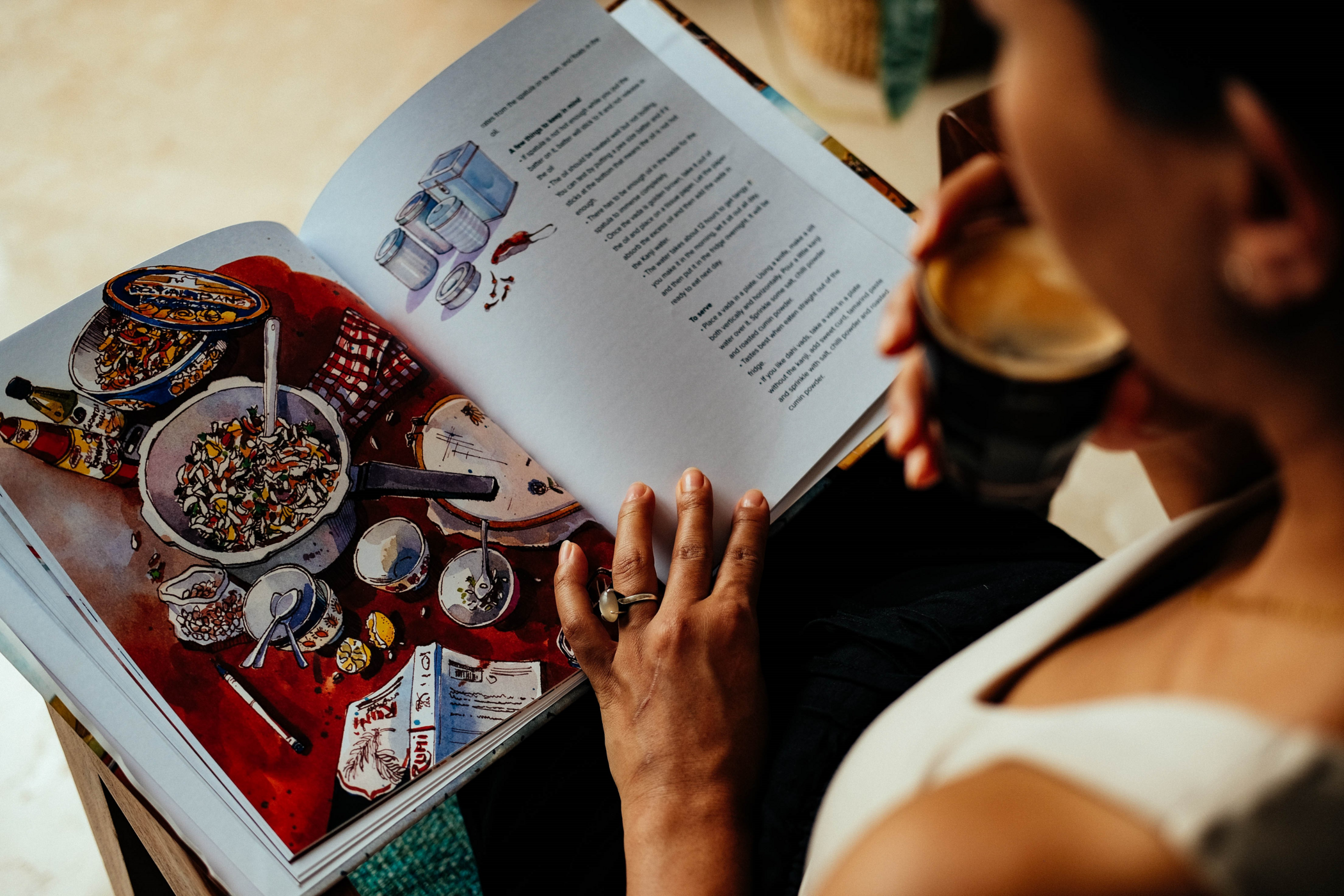
The other initiative is done by the Bombay-based artist Parag Tandel. It’s a recipe book called Ek Bagal Mein Chand Hoga Ek Bagal Mein Rotiyan.(2) “Chand” means moon, and moon is a metaphor for a bhakri, or a round Indian bread. The book is an archive of recipes from the Koli community, which are the fisher folks of Bombay. They are an indigenous community—the original inhabitants of the islands. Their modes of sustenance have changed as a result of textile mill crises and shifting economy structures. Tandel facilitated long cooking and sharing sessions with the women from the community who are supporting their families in the midst of industrial shutdowns in the city. So, the archival practice is also closely connected with these changing conditions. With the entry of big companies in the fishing business, for instance, many lost their livelihood. So, this project was a way to preserve these recipes along with visual representations of vegetation, sea species, as well as underwater habitat through a recipe book. Tandel uses the colour maroon for the recipe book, which is the kind on government folders, giving it the look of a registered document that one may find in the state archives. Again, questioning what is being preserved or what is being left out of these official narratives and dominant histories.
There is another publication on recipes that are considered stigmas. It was originally published in Marathi titled Anna He Apoorna Brahma, which was translated as Dalit Kitchens of Marathwada. In the title of his book, the author deliberately plays on this familiar phrase, “Anna He Poorna Brahma,” which means food is complete and divine, suggesting instead that food is incomplete in reality. In doing so, he challenges the food hierarchies and rules imposed by dominant castes. The book contains a collection of recipes by Shahu Patole from the Marathwada region of Central India. It shows how caste discrimination has forced certain communities to survive on incomplete and restricted diets, and how they negotiate the shame and stigma attached to specific foods. At the same time, by bringing these recipes into the public domain, the book attempts to dismantle that stigma through their circulation and recognition. One such recipe is Rakti—fried blood—a dish commonly prepared and eaten within Dalit communities.
When we think about recipes and histories of food, we are generally thinking about things that are available and accessible in abundance or surplus. But how do we think about recipes that are born out of scarcity and hunger? There is an official forgetting of these practices, and these artists try to bring them back into conversation and circulation through their practices.
JC: Yeah, it’s very important but also very challenging work, to document family recipes at the level that these artists and Nivaala and 1000PIECES are doing. While recording these recipes, it is crucial to keep in mind the various social structures around the kitchen and the purposeful forgetting of certain communities by dominant narratives. I’m really glad that there are so many artists and researchers who are also thinking about preserving and expanding food history in this way.
TY: A friend of mine once said something that really inspired me: Throughout history, grassroots or community-led research has often gone deeper than official or academic studies. It’s not just that it’s more down-to-earth or realistic—it’s genuinely deeper.
Around us there are many independent researchers and artists who are doing meaningful work driven by their own personal passions. For example, we have a friend who is a Sichuan cuisine researcher. Her name is 小妖. She publishes most of her work on her WeChat public account 川菜尋遊記. She has been traveling around the Sichuan province, visiting old restaurants and interviewing old chefs. She compiled her interviews into an oral history book. These chefs share their techniques and memories. These findings and details cannot be seen in any other file or book.
We also have a friend living in the Netherlands who is a designer and an artist. Her name is Ziyi Lian and she documents the history of Chinese restaurants in the Netherlands. She traces how these restaurants have evolved in the past sixty years. She also developed it into a board game called “Surviving at the Table.” You can play the role of a restaurant owner and experience how they make decisions and run their restaurants. You are put in their shoes and can understand how difficult it is to run a business in a totally different culture.
Recently, we also came across a team called Earth Buffet that published a book called The Chinese Women as Cookbooks Writers. It focuses on the life stories of female authors behind some of the most important Chinese cookbooks.
Food might not be the most valued culture in Chinese mainstream society—most people tend to see food culture as a trivial and everyday thing—but it is the most universal culture. It is a culture of the people, by the people, for the people, so anyone can start their own research. I think these independent researchers do important work to fill in the gaps and deserve our greatest respect.
ND: Indeed. There have been some important writings on food histories in this part of the world. More recently, however, there have been initiatives that approach food more critically, and I think both of your practices are testament to that. As I was listening to you both speak, I was struck by the diversity of your practices, but also this recurring figure of the grandmother. Recipes and food histories almost inevitably conjure up this image, don’t they? The grandmother as the keeper of recipes, the bearer of culinary knowledge passed down through generations, someone who cooks intuitively, relying on memory of smell or taste rather than measurements—a figure associated with warmth, nourishment, abundance, and hospitality. I want to come at this figure a little differently.
I was reminded of this anecdote from an autobiography written by Sharankumar Limbale, which portrays a completely different picture. The original title is Akkarmashi. It’s translated into English as The Outcaste but the literal translation of the title is an illegitimate birth of a mixed lineage, which is used as a derogatory label. In it, the author narrates his childhood in a village, where he was born out of an oppressive relationship between an upper caste landlord and a poor Dalit woman. The book starts with his memories about his childhood as a schoolboy, including stories of hunger, deprivation, and scarcity. As a young boy, he was constantly thinking about food. In all his memories, he’s looking for food and trying to find food with his friends and siblings. In that context, he recounts a story about how his grandmother would collect food for him and his siblings. She would walk around the village every day to collect leftovers from upper caste villagers to feed her grandchildren. But his grandmother would make rotis for herself from the grains that she collected. And he was very upset that she never offered this bread to him. He would only get the leftover food, which was also sometimes spoiled. Then he narrates how she made these rotis for herself. His grandmother would go to grasslands and collect cow dung. Then, she would run water through these piles of cow dung and collect the undigested grains. She will dry these grains, grind them manually, prepare the roti, and eat it. The young boy kept asking for the roti but she would always refuse. Finally, she gave in, and she offered him a piece of roti. And he had that piece and felt like throwing up because the roti kind of still carried the stench from the grains. This strong stench never left him.
I was quite struck by this narrative that strips people of their dignity, and how it completely shifts the idea of a family recipe and the figure of the grandmother—how recipes travel from one generation to another. How do we make sense of it, of these experiences? Because you can’t separate or detach food from the body, from smell and touch, which are, again, very fraught ideas in the Indian context. I was just wondering if there is anything that resonates, that might have come up in any of your conversations or experiences as food researchers that may destabilise the idea of a family recipe itself?
TY: Thank you for sharing this profound story. During our experience, not all stories we encounter were positive. We once did research on zero food waste recipes. One of our friends runs a zero-waste restaurant and she asked if there are any similar recipes in Chinese culinary history. This concept was new to us but through our research, we realised that Chinese people might have been doing this for ages. The stems of the eggplant, the rinds of the watermelon, the stalks of broccoli—they were not scraps; they were food before! Home cooks had different ways of making them into delicious snacks or pickles. There is also a dish that stews all the leftovers together. It exists everywhere in China under different names but it’s gradually disappearing. It used to be for poor people and labour extensive workers who had to eat the dish for strength. Their experiences are not mentioned anymore with the disappearance of these recipes.
ST: I feel like it’s a privilege to be able to document your recipes. Not just in the sense that your elders are still around, but also because you’re not fighting for survival. It is a privilege to be like, “this is my food, this is my identity,” and documenting it because you’re not fighting to get a plate of food, like in the story you mentioned. Preservation is privilege.
Also, if you look at migration and tumultuous times, like during the Partition, for example, there were a lot of food made from leftovers. There’s a Sindhi dish called Seyal Maani made from leftover rotis. Today, it is also a comfort food that gets served in Sindhi pop-up menus and supper clubs. I ask my friend to make it for me all the time. It’s a dish that came from a place of survival because people didn’t want to waste food when there was a paucity.
ND: It’s always a struggle to sustain our work, especially in the Indian context. We get funding support from individuals and from foundations and so on. But in India, I think education and health are a higher priority for many of these foundations compared to art and archiving. So, we do struggle a lot, but we have an amazing team and what keeps us going is also the exciting conversations we have and the research we are working on. However, Asia Art Archive is a formal entity and a significant amount of our work is done through collaborations. For more independent initiatives, the struggles are of course very different and the questions are also very different. Maybe Shruti can speak more about this.
ST: Right now, we’re completely bootstrapping it. The struggle is real to get funding and support for archiving. The narrative is changing where gastronomy and food are being looked at as intangible heritage, so it will likely get easier. But it always happens in piecemeal. You have to get ten percent from here, twenty percent from there, and then slowly work your way up. That’s something we are also struggling with. We also try to look out for grants and see who we can work with to create different expressions of the work that we do and make it more engaging.
TY: Thank you for sharing. Currently, most of our income comes from collaborations with brands, especially with food companies. We co-create content based on family recipes and the stories we collect. It’s more like branding services. We are just starting to break even after all these years, so now we are trying to invite more friends to join our programmes to create better content in different forms, such as making videos and documentaries. I learned about so many creators who are doing similar work today. Maybe one day we can invite them together and have more conversations.
JC: Yeah, that’s also why I wanted to have this conversation with you all today. Even though you are doing such similar things and have some similar motivations, there’s also a big difference in context and approach that is really fascinating to get to know more about. I would definitely want to continue this discussion in the future and connect more people who are interested in food archiving.Thank you so much for joining the conversation today. I learned so much.
ND: Thank you so much. It was amazing.
ST: Yeah, it was really lovely. Thank you.
TY: Thank you.
YX: Thank you.
Shruti Taneja is the founder of Nivaala, India’s first voice-first food heritage preservation platform. Nivaala works across a multilingual recipe archive app, community programmes, and bespoke family cookbook publishing to treat recipes as inheritances, and living documents of memory, migration, and identity. Nivaala’s co-created publication Memories on a Plate won the Gourmand World Cookbook Award in 2024. Taneja is based in Delhi.
Young Xiao and Tiantong Yan are food culture researchers, writers, and co-founders of the food culture brand 1000PIECES. Their work revolves around family recipes. They launched the local food newsletter 1000PIECES Journal in 2021, followed by the In Search of 1000 Family Recipe Keepers initiative in 2022, which engaged audiences worldwide via the travelling exhibition Home Around the Table that showed in London, Beijing, Shanghai, Guangzhou, etc. They have recorded hundreds of family recipe stories from thousands of participants through this initiative and maintains a long-term focus on documenting the food stories of immigrant and diaspora communities.
They authored In Search of Mapo: Tracing the Origins of Mapo Tofu (2024) and Street and Alley Canteens of Fuzhounese (2025, with Homeland Magazine). Their art book portfolio includes Home Around the Table (2026), Chinese Family Recipe Special Edition (2022), and Squid Cooking Manual (2021).
Judy Chiu is Associate Editor at Asia Art Archive.
Noopur Desai is Researcher at Asia Art Archive in India.
Notes
1. Liquified petroleum gas.
2. On One Side Lies The Moon, On The Other Lies The Bread.